

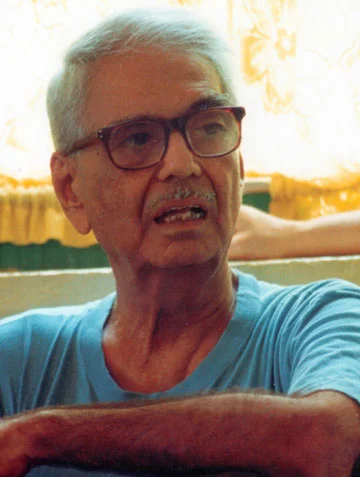
August 6, 1987
by Eruch Jessawala
Mandali Hall
Meherazad
India
Transcription Instructions
1.) Find the BOLDED title below; select and click to open the pdf transcript.
2.) On the right side of this webpage, select and play the talk with the same title.
3.) Read along as you listen to Eruch’s talk.
Note: Only BOLDED titles have transcriptions.
6. Don't Worry But Be Concerned
14. Song 1 - No transcript
15. Song 2 - No transcript
16. Song 3 - No transcript
17. Song 4 - No transcript
18. Song 5 - No transcript
19. Song 6 - No transcript
-
ack and Eruch discuss the importance of accepting criticism with honesty and awareness of one’s own unworthiness, emphasizing that this perspective comes from a deeper understanding of the Master’s greatness. They also explore the idea of using criticism as an opportunity for self-examination, regardless of the source or validity of the criticism. The conversation touches on the concept of humility and the need to reorient psychology towards the “real self” rather than the “false self.”
-
A discussion about the relationship between psychology and spirituality, particularly Meher Baba’s teachings, takes place. The conversation touches on the idea of the “false self” and the need to transcend limitations, with a focus on the potential for psychology to align with spiritual goals. The discussion also references a book, “In Search of Truth,” which explores the connection between Baba and various psychologists. The discussion revolves around the concept of ego and its limitations. It is argued that the ego, when unburdened by limitations, becomes infinite and experiences itself as such. The conversation also touches on the role of Meher Baba in helping individuals overcome their limitations and grow stronger through love and devotion.
-
In the 1930s, Meher Baba collaborated with individuals interested in filmmaking, providing guidance and messages for their scripts. One such script, “This Man, David,” was inspired by Baba’s ideas and outlined a story about three souls’ spiritual journey. The script, copyrighted in 1935, included a scene depicting Baba’s face appearing on a tree, a phenomenon that later occurred at Meherazad after Baba’s passing.
-
A young woman, who worked as a telephone operator, was frightened walking home alone at night. Meher Baba reassured her that He was always with her and to call out to Him if she ever felt scared. Years later, she encountered danger and remembered Baba’s words, calling out His name, and felt His presence as others were scared away.
-
The first qualification for finding God is congenital felicity, which means being born and raised in a spiritually conducive environment where love for God is prevalent. If congenital felicity is lacking, a strong body, good hearing, observant eyes, and a knowing heart are important qualities to cultivate.
-
Baba’s message “Don’t worry, be happy” is not an injunction to never worry, but a comfort. He knows the end result of everything, like an author who knows the ending of a book, so He encourages us to be concerned but leave the rest to Him.
-
Dr. Ghani, a school friend of Meher Baba, was known for his humor, intelligence, and laziness. He participated in Baba’s New Life journey despite his age and physical limitations, often entertaining Baba with humorous anecdotes. Although he was given special privileges due to their friendship, he respected Baba’s authority and was eventually forgiven for his transgressions.
-
Eruch discusses the Ellora Caves, highlighting their unique atmosphere that attracted Meher Baba. He recounts the legend of the Kailash temple, built from the top down to appease a princess longing for her Himalayan Kailash temple. Eruch also touches on the caves’ diverse cultural influences and the damage inflicted by the Moguls.
-
Meher Baba chose to be buried in a tomb built from stones of a dismantled military post office. He spent time in seclusion in a pit covered with bamboo matting before the tomb was built. The tomb features murals painted by Helen Dham, a renowned artist from Switzerland. Meher Baba instructed Eruch to bring his body to Meherabad for burial after his death, and to play the song “Begin the Beguine” at his funeral. Despite initial skepticism, Eruch prepared for this eventuality, including learning the song’s lyrics. After Baba’s death, Eruch followed his instructions, playing the song during the funeral procession and burial at Meherabad. After Meher Baba’s passing, His body was kept open for seven days, allowing many to pay their respects. A concrete slab was placed over the tomb, later replaced with a marble slab featuring engravings. Restoration work on the mural was entrusted to a skilled artist, who experienced a setback when the emulsion he used caused the mural to disappear, only to reappear miraculously after a period of prayer and penance.
-
Eruch discusses Meher Baba’s teaching to “hold on to His daaman,” explaining that it means to hold on to His true form, not just His physical appearance. He emphasizes the importance of focusing on one mental image of Baba to avoid distractions from His many photographs. Eruch clarifies that while Baba’s personality is universal, each individual’s connection to Him is unique. Eruch discusses the importance of using imagination to connect with Baba, especially in his absence. He emphasizes that true understanding of Baba comes from becoming one with him, shedding limitations, and realizing one’s own infinite nature. Eruch encourages pilgrims to use their imagination to build a connection with Baba, ultimately leading to a realization of their own oneness with him.
-
During the New Life, Eruch and the mandali faced physical challenges but never questioned their purpose due to Baba’s overwhelming presence. Baba repeatedly asked them to express their love for Him, not out of need, but to sow the seed of love within them. Eruch realized that their ability to love Baba was a gift from Him, a command given with love, and that true love for God requires losing oneself in that love.
-
Mani’s house, known as the Pumpkin House, was the subject of litigation as it was occupied by a tenant, Mr. Waz, who was reluctant to leave despite having other properties. After a lengthy legal battle, Meher Baba’s followers were able to reclaim the house.
-
The discussion centers around the importance of spreading Meher Baba’s name and message. While it is emphasized that the responsibility lies with the followers to share His name and message, the outcome and results are left to Baba’s discretion. The potency of His name is acknowledged, and it is highlighted that the current phase encourages the dissemination of His name to humanity. Eruch discusses the importance of repeating God’s name, using the allegory of a debtor hiding from creditors to illustrate the relationship between devotees and the Lord. He emphasizes that true remembrance of God involves forgetting oneself and allowing the divine to emerge, rather than mere repetition of a name. Eruch shares a story about a saint who used the impact of a single word to illustrate the power of repeating God’s name.
-
Jim Meyer
-
Jim Meyer
-
Jim Meyer
-
Jim Meyer
-
Words: Malcom Schloss; Music: Jim Meyer
-
Baba would reminisce about his childhood, playing games like marbles, flying kites, and cricket with his mandali. He also enjoyed playing chequers, as evidenced by a picture of him playing with Kumar.
-
Eruch Jessawalla