

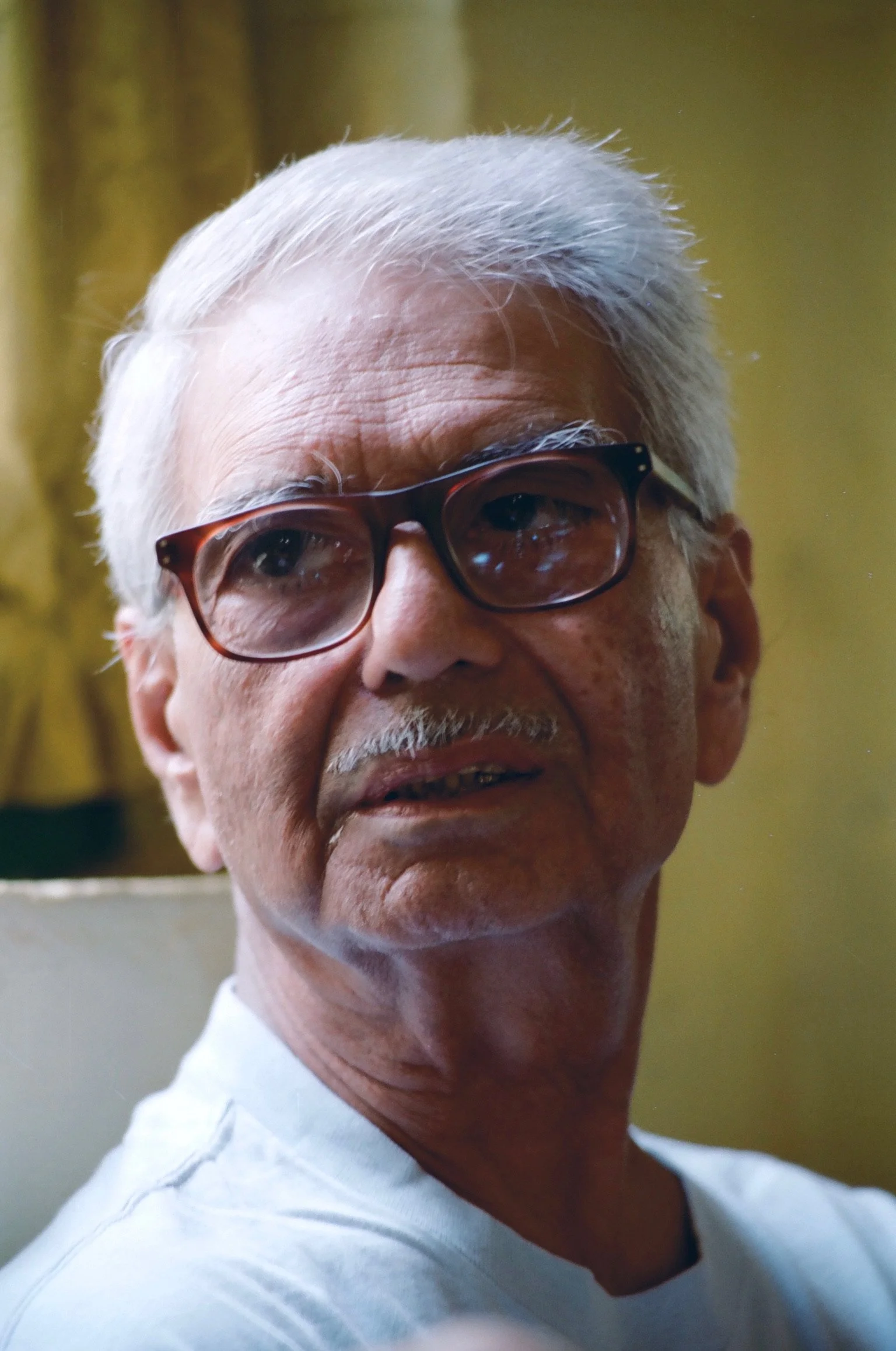
Autumn 1977
by Eruch Jessawala
Mandali Hall
Meherazad, India
TRANSCRIPTION INSTRUCTIONS
A.) Find the BOLDED title below to select and click to open the pdf transcript.
B.) On the right side of this webpage (or below if mobile device), select and play the talk with the same title.
C.) Read along as you listen to Eruch’s talk.
Note: Only BOLDED titles have transcriptions.
-
A dog named Peter, who lived near Baba’s residence in Mussoorie, was initially hostile towards chipmunks. However, after witnessing Baba care for a chipmunk, Peter’s attitude changed, and he became protective of them.
-
Meher Baba had a unique way of accepting donations for His work. He would often refuse money offered to Him, but when He did accept it, He would instruct the donor to use it to help a specific person or family in need. Eruch recounts an instance where Baba instructed him to give a large sum of money to a family in Bhor, after overhearing a conversation about their financial struggles. Eruch, guided by Meher Baba, visited a destitute family in Bhor, where a former municipal officer was demoted due to his honesty. The family, living in dire poverty, was skeptical of Eruch’s intentions until he presented a gift from Meher Baba. The man, who had been contemplating suicide, was deeply moved and grateful for the unexpected assistance.
-
On July 10th, Meher Baba’s mandali observed Silence Day, a day of complete silence in His presence. Eruch B. Jessawala, who was allowed to speak to Baba during this time, recounted how Baba would become frustrated with their gestures and the lack of verbal communication. Even after Baba’s passing, the impact of Silence Day was profound, affecting both strangers and animals who visited the mandali.
-
During a train journey, a woman suggested that Meher Baba, who was observing silence, could be made to speak by visiting a nearby saint’s tomb. The mandali, trying to maintain Baba’s incognito travel, pretended not to understand the suggestion. This incident highlights the challenges of traveling with Baba, who was keeping silence, while trying to keep His identity hidden.
-
During Baba’s travels in India, His followers faced challenges securing train accommodations due to overcrowding. Despite efforts to ease travel, including a reserved compartment arranged by a Baba lover, a military man kicked Baba’s feet while He rested. This incident, witnessed by Baba’s followers, highlighted the difficulties and disrespect they encountered during their journeys.
-
During a train journey, Baba and his companions, carrying a tin of sweets gifted by Eruch’s aunt, found themselves in a packed military compartment. Amidst a chaotic fight between passengers, Baba intervened, calming the situation with a clap and a speech about unity and their duty to protect the country. He then shared the sweets and tea with everyone, fostering camaraderie and resolving the conflict.
-
During a train journey, Meher Baba and his companions encountered a train overcrowded with corpses due to communal riots. To avoid being disturbed, Baba pretended to be a corpse, allowing the train to depart without further incident.
-
After Meher Baba dropped the body, Eruch noticed the women, particularly Mani, were deeply affected by the loss. He used the metaphor of a shepherd watching over a flock of sheep to comfort Mani, explaining that although they couldn’t see Baba, He was still present, watching over them. Eruch emphasized that Baba’s presence was tangible, even if not physically visible, and that He would occasionally make His presence known to reassure them.
-
Baba, like a child, would splash water while washing His face, prompting His mandali to put a bib on Him. Eruch explains that Baba allowed this to make His mandali feel useful and needed, demonstrating His infinite compassion. This act of allowing others to serve Him, despite His own independence, is the greatest miracle of creation.
-
Baba lovers, who have been given more by Baba, are expected to uphold a higher standard of obedience and responsibility. Baba trusts His lovers to be His messengers to the world, and this trust comes with a great responsibility to not let Him down. Being a Baba lover is a divine and unique burden, but it is also a tremendous honor.
-
Baba does not punish, as His state is such that things happen automatically. He accepts presence and longing, and His actions are not based on punishment.
-
Baba’s state is so independent that He cannot be reached, yet He reaches everyone. He becomes man amongst men to make His love, forgiveness, and kindness tangible, allowing us to experience and learn from our actions.
-
Accept our weaknesses. And dedicate our strength to Him.
-
Eruch recounts an incident during a trip with Baba before the New Life, where they attempted to cross the ocean’s backwaters in a makeshift boat. The boat capsized due to interference from local boys, plunging Eruch and Baba into the murky water. Eruch managed to grab Baba’s arm and they both swam to safety, with Baba later remarking that in the same way that Eruch pulled Baba out of the murky backwater, in the future, Baba would pull Eruch out of the murkiness of illusion and give him Reality.